- Images
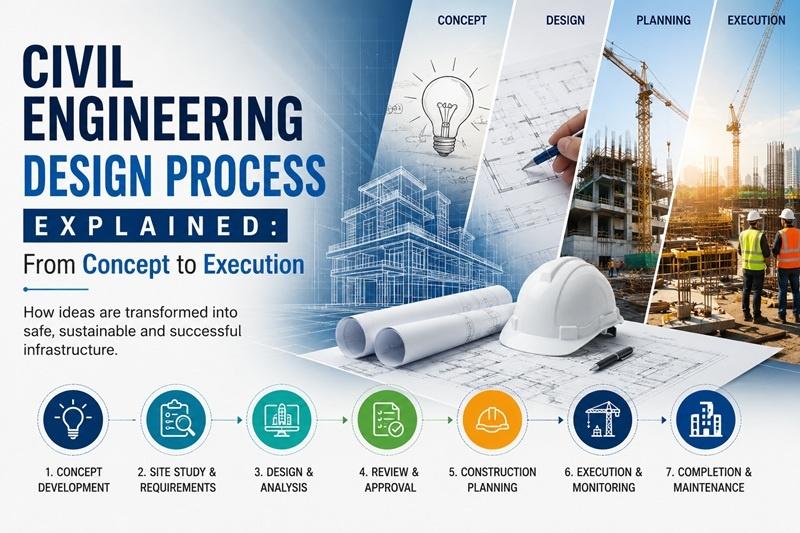
Every bridge, highway, airport, building, or water supply system begins with an idea. Turning that idea into a safe and functional structure requires a systematic design process. Civil engineering is not only about construction. It involves careful planning, technical analysis, design, testing, and execution to ensure every project meets safety, environmental, and economic requirements.
Understanding the civil engineering design process helps students appreciate how engineering decisions shape the infrastructure people use every day.
Also Read : What Should I Avoid When Building My Home on a Budget?
Understanding Project Requirements
The design process starts by identifying the purpose of the project. Engineers work with clients, architects, government agencies, and other stakeholders to understand the project's objectives.
During this stage, engineers gather information such as:
Project goals
Site location
Budget
Timeline
Legal requirements
Environmental considerations
A clear understanding of these factors creates the foundation for successful project planning.
Site Investigation and Data Collection
Before preparing any design, engineers study the project site in detail.
This stage includes:
Land surveys
Soil testing
Geological studies
Traffic analysis
Water availability
Climate assessment
Accurate data helps engineers identify challenges early and design structures that perform safely under real conditions.
Also Read : The Future of 3D Technology in Road Work
Concept Development
Once the necessary information is available, engineers develop preliminary design concepts. Multiple options are often evaluated before selecting the most suitable solution.
The selected concept should balance:
Safety
Functionality
Cost
Sustainability
Ease of construction
Future maintenance
Concept development allows engineers to compare alternatives before moving to detailed planning.
Detailed Engineering Design
After finalizing the concept, engineers prepare detailed technical designs using engineering principles and modern design software.
This stage includes:
Structural calculations
Material selection
Foundation design
Road or utility layouts
Drainage planning
Load analysis
Computer-aided design (CAD), Building Information Modeling (BIM), and structural analysis software improve accuracy and help engineers visualize the final project before construction begins.
Review and Approval
Engineering designs must be reviewed carefully before construction starts.
Design reviews help verify:
Structural safety
Compliance with building codes
Environmental standards
Cost estimates
Construction feasibility
Government authorities and regulatory agencies may also review the project before granting approvals.
Planning Construction Activities
A well-designed project also requires careful execution planning.
Engineers prepare:
Construction schedules
Resource allocation plans
Equipment requirements
Workforce planning
Safety procedures
Quality control measures
Effective planning helps reduce delays, improve productivity, and manage project costs.
Construction and Execution
Construction begins once approvals are complete and resources are in place.
Civil engineers supervise activities to ensure work follows approved drawings and technical specifications.
Their responsibilities include:
Monitoring construction quality
Coordinating with contractors
Solving site-related challenges
Managing timelines
Ensuring worker safety
Maintaining project documentation
Regular inspections help identify issues before they become major problems.
Testing and Quality Assurance
Quality checks continue throughout the project.
Engineers inspect materials, foundations, structural elements, and completed work to confirm everything meets required standards.
Common quality checks include:
Concrete strength testing
Soil compaction tests
Material inspections
Structural measurements
Safety inspections
These assessments help ensure the finished structure performs as intended.
Project Completion and Maintenance
The design process does not end when construction is complete.
Before handing over the project, engineers perform final inspections and prepare documentation for future maintenance.
Regular maintenance helps:
Extend the life of structures
Improve public safety
Reduce repair costs
Maintain operational efficiency
Long-term monitoring also provides valuable information for future infrastructure projects.
The Growing Role of Technology
Modern civil engineering projects increasingly use digital technologies to improve design and execution.
Technologies such as:
Building Information Modeling (BIM)
Geographic Information Systems (GIS)
Drones
Artificial Intelligence
Digital Twins
Project Management Software
help engineers improve accuracy, reduce project risks, and make better decisions throughout the project lifecycle.
Final Thoughts
The civil engineering design process is a structured journey that transforms ideas into safe, reliable, and sustainable infrastructure. From understanding project requirements and conducting site investigations to preparing detailed designs, supervising construction, and ensuring quality, every stage contributes to the success of a project.
As infrastructure continues to evolve through digital technologies and sustainable practices, future civil engineers need both strong technical knowledge and practical problem-solving skills. Understanding the complete design process prepares students to contribute effectively to the development of resilient infrastructure that supports communities for generations.