- Images
Safe Ear Piercing for Children: Everything Parents Need to Know
Introduction
Ear piercing is a cherished tradition across cultures and a significant milestone in a child's life. Whether it's for cultural reasons, aesthetic preferences, or family tradition, making the decision to pierce your child's ears comes with important considerations. At Personiks Hospital, Hyderabad, we believe that this special moment should be celebrated with the utmost safety, care, and professionalism.
This comprehensive guide will walk you through everything you need to know about safe ear piercing for children, from choosing the right time to proper aftercare.
Why Choose Medical Ear Piercing Over Traditional Methods?
The Medical Advantage
While traditional piercing methods have been practiced for generations, medical ear piercing offers several critical advantages:
1. Sterile Environment
Hospital-grade sterilization protocols
Controlled, clean medical setting
Reduced risk of cross-contamination
Professional infection control measures
2. Trained Medical Professionals
Board-certified doctors with pediatric experience
Proper anatomical knowledge
Emergency medical support if needed
Understanding of child physiology and pain management
3. Advanced Equipment
Medical-grade piercing instruments
Single-use, disposable materials
Precise placement technology
FDA-approved jewelry and materials
4. Hygienic Materials
Surgical-grade stainless steel or titanium
Hypoallergenic options
Nickel-free materials for sensitive skin
Pre-sterilized earrings
When Is the Right Time to Pierce Your Child's Ears?
Age Considerations
There's no universally "perfect" age for ear piercing, but here are some guidelines:
Infancy (2-6 months)
Pros: Child won't remember the procedure; less likely to touch or pull earrings
Cons: Requires careful monitoring during healing; immune system still developing
Recommendation: If choosing this age, ensure medical supervision and follow strict hygiene protocols
Toddler Years (1-4 years)
Pros: Still young enough not to be overly anxious
Cons: More active, may pull at earrings; harder to explain aftercare
Recommendation: Requires constant parental supervision during healing
School Age (5+ years)
Pros: Can understand and follow aftercare instructions; can express if something feels wrong
Cons: May be more anxious about the procedure
Recommendation: Often considered the ideal age by many pediatricians
Cultural and Personal Factors
Many families choose ear piercing timing based on:
Cultural or religious traditions
Family customs
Child's own interest and readiness
Special occasions or celebrations
Expert Tip: At Personiks, we recommend waiting until after your child's initial vaccination schedule is complete to ensure their immune system is better prepared for healing.
The Medical Ear Piercing Process at Personiks
Step 1: Initial Consultation
What to Expect:
Detailed discussion about the procedure
Medical history review
Allergy screening
Answering all your questions and concerns
Explaining aftercare requirements
Preparation:
Ensure your child is healthy (no fever, infections, or illness)
Feed your child before the appointment
Bring comfort items (favorite toy, blanket)
Wear comfortable clothing with easy ear access
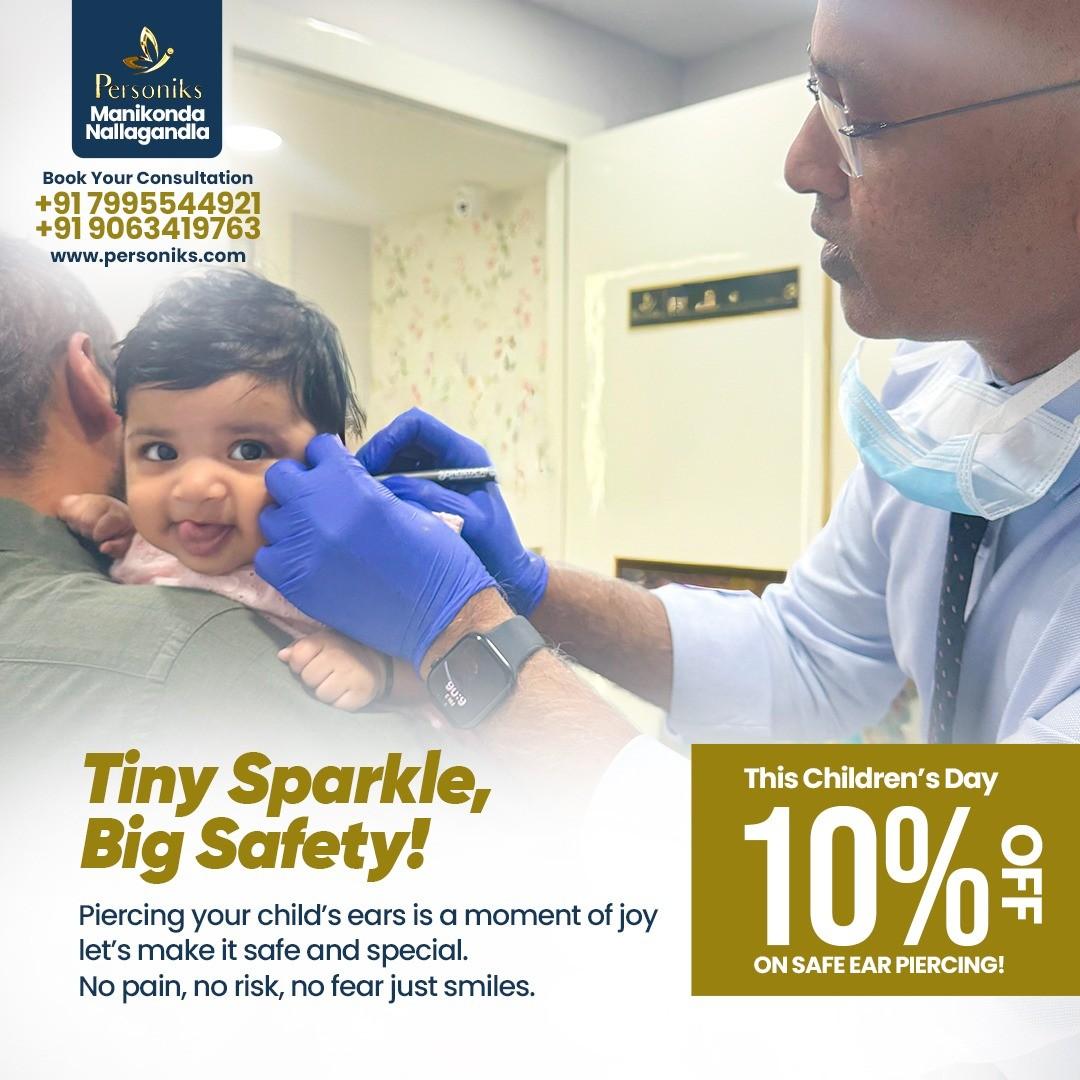
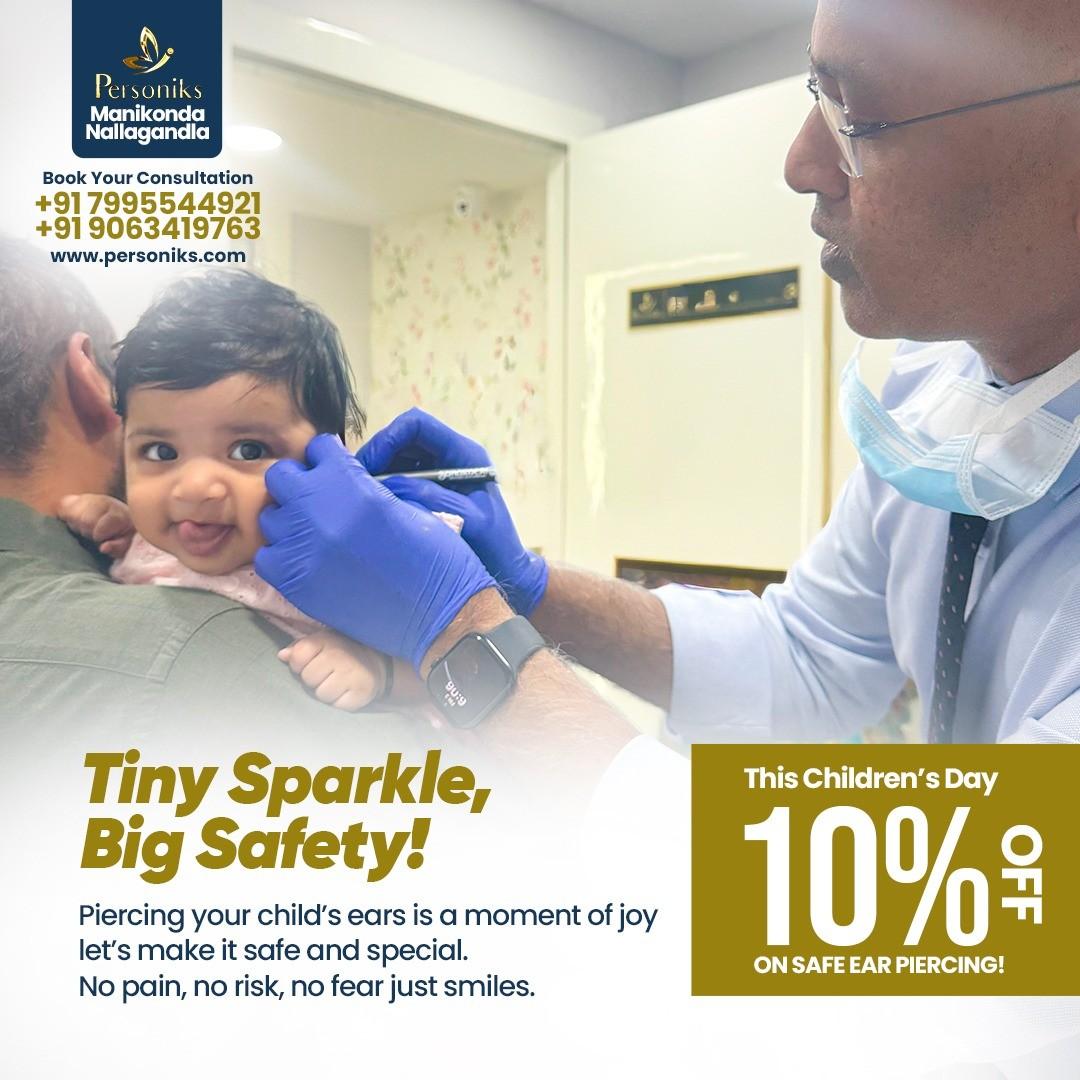
Step 2: The Piercing Procedure
Our Child-Friendly Approach:
Marking the Position
Precise marking using medical markers
Parent approval of placement
Symmetrical positioning
Preparation
Cleaning the ear with medical-grade antiseptic
Creating a calm, comfortable environment
Allowing parent to hold the child
The Piercing
Quick, precise procedure (takes only seconds)
Minimal discomfort using advanced techniques
Both ears can be done simultaneously if preferred
Immediate placement of hypoallergenic starter earrings
Immediate Aftercare
Professional cleaning
Application of antiseptic solution
Detailed aftercare instructions provided
Pain Management:
Our specialized techniques and child-friendly approach ensure minimal discomfort. Most children experience only a brief moment of pressure, and many don't cry at all!
Step 3: Post-Piercing Support
Detailed written aftercare instructions
24/7 helpline for concerns
Follow-up appointment scheduling
Guidance on when to change earrings
Comprehensive Aftercare Guide
Daily Care Routine (First 6-8 Weeks)
Cleaning Protocol:
Frequency: 2-3 times daily (morning, evening, and after swimming/sports)
Steps:
Wash your hands thoroughly with antibacterial soap
Clean the front and back of the earlobe with provided antiseptic solution
Gently rotate the earring (if recommended by your doctor)
Pat dry with clean tissue or sterile gauze
Avoid touching the piercing unnecessarily
Recommended Cleaning Solutions:
Saline solution (saltwater)
Medical-grade antiseptic provided by hospital
Alcohol-free wound cleaners
Do's and Don'ts
✅ DO:
Keep hands clean before touching the piercing
Clean the piercing regularly as instructed
Keep hair away from fresh piercings
Use clean pillowcases
Watch for signs of infection
Follow up with your doctor as scheduled
Keep the starter earrings in for the full healing period
Apply ice (wrapped in clean cloth) if swelling occurs
❌ DON'T:
Remove earrings during the healing period
Use harsh chemicals or hydrogen peroxide
Let the child swim in pools, lakes, or oceans during healing
Apply makeup, lotions, or hair products near piercings
Allow the child to sleep on the pierced ears initially
Use heavy or dangling earrings during healing
Ignore signs of infection
Signs of Normal Healing
Mild redness around the piercing site (first few days)
Slight tenderness or sensitivity
Light clear or white discharge (dried lymph)
Gradual improvement over time
Warning Signs - When to Contact Your Doctor
⚠️ Seek immediate medical attention if you notice:
Excessive swelling that worsens after 48 hours
Severe pain that increases over time
Yellow or green discharge (pus)
Foul odor from the piercing
Red streaks extending from the piercing
Fever above 100.4°F (38°C)
Bleeding that doesn't stop
Earring becoming embedded in the skin
Signs of allergic reaction (severe itching, rash, blistering)
Choosing the Right Earrings
Starter Earrings (First 6-8 Weeks)
Material Requirements:
Surgical-grade stainless steel
14k or 18k gold
Titanium
Platinum (for very sensitive skin)
Design Specifications:
Small, lightweight studs
Secure backing (not too tight, not too loose)
Smooth surface without decorative elements that can irritate
Hypoallergenic materials only
After Healing is Complete
Once your child's piercings have fully healed (typically 6-8 weeks for earlobes), you can explore:
Fashion earrings (still hypoallergenic recommended)
Slightly larger designs
Different metals (if no allergies)
Age-appropriate styles
Important: Always ensure:
Secure backings to prevent loss
Age-appropriate sizes (avoid choking hazards)
Continue using hypoallergenic materials
Remove earrings during sports or rough play
Safety Considerations and Risk Management
Understanding Potential Risks
While ear piercing is generally safe, being aware of potential complications helps you take preventive measures:
1. Infection
Risk Level: Low with proper medical procedures and aftercare
Prevention: Strict hygiene, proper cleaning, avoiding contamination
Treatment: Most infections respond well to topical or oral antibiotics
2. Allergic Reactions
Common Triggers: Nickel, certain metal alloys
Prevention: Use hypoallergenic, medical-grade materials
Solution: Switch to titanium or pure gold if reaction occurs
3. Keloid Formation
Risk Factors: Family history, skin type, genetic predisposition
Prevention: Proper piercing technique, avoiding trauma
Management: Medical treatment available if keloids develop
4. Tearing or Trauma
Causes: Pulling, catching on clothing, rough play
Prevention: Appropriate earring selection, supervision, protective measures
Action: Remove earring, clean, seek medical attention if needed
5. Embedding
Cause: Earring back too tight, swelling
Prevention: Proper backing adjustment, monitoring
Treatment: Professional removal, wound care
Special Considerations
Children with Medical Conditions:
Diabetes: May affect healing; requires closer monitoring
Blood disorders: Consult hematologist before piercing
Immune deficiencies: Higher infection risk; extra precautions needed
Skin conditions: Discuss with dermatologist first
Premature Babies:
May require delayed piercing
Consult pediatrician for appropriate timing
May need specialized care approach
Cultural and Emotional Aspects
Celebrating a Milestone
Ear piercing is often more than a cosmetic choice—it's a meaningful cultural tradition and family celebration:
Cultural Significance:
Many cultures pierce ears in infancy as part of tradition
Religious ceremonies may include ear piercing
Family traditions passed through generations
Symbol of cultural identity and heritage
Making It Special:
Take photos to commemorate the moment
Create a positive, calm atmosphere
Reward your child afterward (special treat, toy)
Share the experience with family
Document the milestone in baby books
Preparing Your Child Emotionally
For Older Children:
Communication is Key:
Explain the process honestly but reassuringly
Watch age-appropriate videos together
Visit the facility beforehand
Let them ask questions
Never use threats or force
Building Confidence:
Praise their bravery
Let them choose their earrings (from safe options)
Involve them in the decision-making
Discuss aftercare as their responsibility (with help)
Share positive stories from others
Dealing with Fear:
Validate their feelings
Provide comfort items
Don't rush the decision
Consider waiting if they're very anxious
Practice relaxation techniques together
Why Choose Personiks Hospital for Your Child's Ear Piercing?
Our Commitment to Excellence
1. Medical Expertise
Board-certified doctors specializing in cosmetic procedures
Extensive experience with pediatric patients
Understanding of child psychology and comfort needs
Trained in managing anxious children
2. State-of-the-Art Facility
Modern, child-friendly environment
Hospital-grade sterilization equipment
Comfortable, welcoming waiting areas
Emergency medical support available
3. Safety-First Approach
Strict adherence to medical protocols
Single-use, disposable equipment
FDA-approved materials
Comprehensive infection control measures
4. Personalized Care
One-on-one attention
Customized approach for each child
Parents welcome throughout procedure
Cultural sensitivity and respect
5. Comprehensive Support
Detailed pre-procedure consultation
Clear, written aftercare instructions
24/7 helpline for concerns
Follow-up appointments included
Long-term guidance available